Beyond the M25: How America's Grill Culture Conquered Britain's Provinces
Photo: Mike Faherty, CC BY-SA 2.0, via Wikimedia Commons
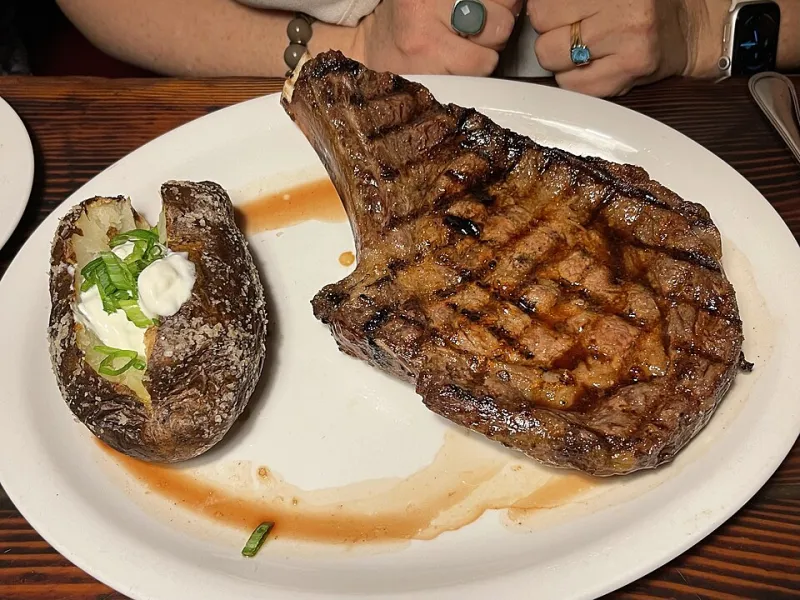
There was a time when the American steakhouse in Britain meant one thing: a cavernous room in Mayfair, a suit-and-tie maître d', and a ribeye priced like a second-hand car. Those days are done. Right now, some of the most exciting grilling in the country is happening hundreds of miles from the capital — and the chefs behind it aren't apologising for doing things their own way.
Manchester Leads the Charge
Ask anyone watching the regional dining scene and they'll point you north. Manchester has quietly become Britain's unofficial second home for New York-style grilling, with a cluster of venues serving dry-aged porterhouse, filthy martinis and portion sizes that would make a Manhattan maitre d' nod in approval.
"We're not pretending we're in Manhattan," says one city-centre chef, who asked us to keep his restaurant's name out of the piece for fear of the queue getting longer. "We're doing a New York steakhouse with Salford accents. The beef's from the Pennines, the butter's from Lancashire, and nobody here wants a £90 steak on a Tuesday."
That pragmatism is the thread running through the whole movement. Regional operators can't rely on expense accounts and tourists; they need locals to come back monthly. So prices sit lower, cuts are sourced closer to home, and the theatre is dialled up rather than down.
Sourcing British Beef for American Cuts
Here's the practical challenge: a proper New York strip or a bone-in cowboy steak isn't something the average British abattoir has traditionally cut. Regional chefs have had to build relationships with butchers, often teaching them the exact specs they want — thickness, marbling, bone-in or bone out.
The result, several told us, is better beef than the imports. Grass-fed British cattle bring a depth of flavour that grain-fed imports can't match, even if the fat profile is different. One Glasgow owner puts it bluntly: "American guests tell us our striploin tastes more beefy than back home. That's not a complaint."
Aging is the other battleground. Dry-aging cabinets have sprung up in kitchens from Bristol to Leeds, with chefs experimenting beyond the standard 28 days — some pushing 60, others blending wet-aged and dry-aged cuts on the same menu to give diners a genuine choice.
Authenticity or Adaptation?
This is the question every owner we spoke to wrestled with. Do diners want a faithful reproduction of a Brooklyn chophouse, or something that wears the influence lightly?
The honest answer: both, depending on the city. In Edinburgh, one operator reports that tourists specifically book looking for the full American experience — checkerboard floors, Sinatra on the speakers, the works. In Bristol, a basement grill has found success by stripping the concept back to fire, salt and a short wine list heavy on English reds.
The food tells the same story. You'll find regional twists everywhere once you look: a proper British pork shoulder shoulder-to-shoulder with the brisket, black pudding showing up on the starters list, and — in more than one kitchen — a sticky toffee pudding sharing the dessert menu with a New York cheesecake.
"Adapt or die," shrugs one Birmingham owner. "If I served nothing but American classics done by the book, I'd be a museum. We take the technique, the generosity, the fire — and then we cook for the people actually sat in our dining room."
Why the Regions Are Winning
There's a structural reason the provinces are thriving with this format: rents. A 40-cover grill room in Glasgow costs a fraction of what the same space would in Zone 1, which means the operator can spend the difference on better beef and staff who stay longer than a season.
Add in the fact that regional food scenes — Manchester, Glasgow, Bristol, Leeds — have never been stronger, and the American-style grill stops being a novelty and starts being a natural fit. Diners outside London have long understood hospitality; what the New York template adds is a sense of occasion without the stuffiness.
Where to Point Your Fork
If you're plotting a steak pilgrimage this year, the regions deserve your attention. Look for places with their own aging cabinet, a butcher named on the menu, and a bar that takes its Negroni seriously. Those three signs, in our experience, mean the kitchen cares.
The New York steakhouse was never really about New York anyway. It's about fire, beef, and a warm welcome — and on that front, Britain's provinces have nothing to learn from Manhattan.