One Steak, Three Names: What You're Actually Ordering When You Ask for a New York Strip
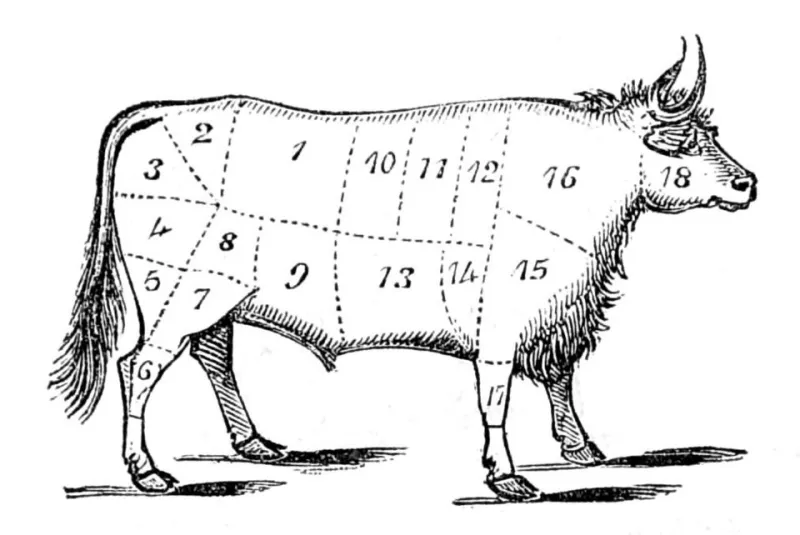
Photo: Anne Cobbett (1795-1877), Public domain, via Wikimedia Commons
Few cuts of beef have suffered an identity crisis quite like this one. Order a New York strip in Manhattan and you'll get exactly what you expect. Order a striploin in Dublin, a sirloin in London or a Kansas City strip in Kansas City, and — if the kitchen knows its trade — you'll get the same steak. Three continents, one muscle, and a frankly unhelpful amount of menu jargon.
So let's settle it once and for all: what are you actually eating, and is it worth the money?
The Anatomy Lesson (We'll Keep It Short)
The cut in question comes from the short loin of the cow — a muscle that does very little work during the animal's life, which is precisely why it's so tender. It sits on the backbone, just behind the ribs, and it's the same muscle that, left on the bone with the tenderloin attached, becomes a porterhouse or T-bone. Cut it free, boneless, and you have the strip.
It's a steak of two virtues: tender enough to cut with a standard knife, but with enough fat running through it to taste like proper beef. It's the Goldilocks cut — more flavour than a fillet, more finesse than a ribeye. Which, you suspect, is exactly why it became the steak that restaurants put on the marquee.
Why the Name Is a Bit of a Mess
The "New York" branding is largely the work of one Delmonico's, the legendary Manhattan chophouse, whose 19th-century menus helped cement the cut's association with the city. The "Kansas City strip" is the same steak with the bone left on. The "shell steak" is the same steak again, so called because the muscle sits in the carcass like — you guessed it — a shell.
And here's the bit that confuses British diners most: in the UK, this cut is simply called sirloin. Not a mistake, not marketing — just a transatlantic naming fork. The confusion arises because Americans use "sirloin" for cuts from further back on the animal, which are noticeably tougher. So a British "sirloin steak" and an American "sirloin steak" are genuinely different things. If a UK menu is charging New York strip prices for what is, locally speaking, sirloin — that's not a rip-off. That's just translation.
Is It Overpriced Marketing?
Our honest verdict: partly, yes — but not because the steak is bad. The strip's legendary status means it commands a premium at restaurants that would charge the same for a lesser cut and hope you wouldn't notice. When a steakhouse menu prices the strip above the ribeye, ask yourself what you're really paying for: the cut, or the name?
Cooked at home, the strip is arguably the best-value premium steak there is. It needs no basting gymnastics, no careful rendering — just a hot pan, salt, pepper and five minutes of patience.
The Great British Supermarket Test
We compared strip steaks (labelled sirloin, naturally) across the UK's usual suspects, judging on marbling, thickness and price per steak.
The budget supermarkets offer sirloin at remarkably low prices, but expect thin cuts — 1.5cm or less — which will overcook before they develop a crust. Fine for a midweek fry-up, hopeless for steak night.
The mid-tier supermarkets are the sweet spot for most people: their "best" or "extra mature" sirloin lines typically offer 21–28 day dry-aged beef at around £7–10 per steak, with genuine marbling and a proper 2cm+ thickness. Waitrose and M&S consistently punch above their weight here.
But the real winner? Your local butcher. A good independent will sell you a 28-day dry-aged sirloin, cut to your preferred thickness, for less than the supermarket premium lines — and they'll cut it thick, which matters enormously. Ask for 3–4cm and cook it low and slow before a hard sear. That's the steak that justifies the New York strip's reputation.
The Verdict
The strip earns its fame. It's the most balanced steak on the animal — tender, flavoursome, forgiving to cook. Just buy it thick, buy it aged, and don't pay a premium for the words "New York" when the butcher's sirloin is the very same thing.