Eight Quid for Cold Lettuce: The Wedge Salad Has Some Explaining To Do
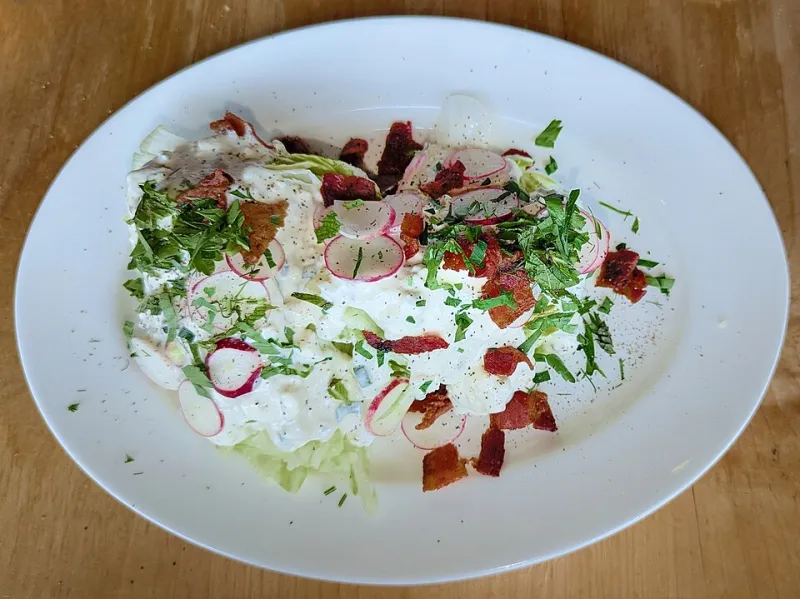
Photo: Daderot, CC0, via Wikimedia Commons
There is a moment of quiet arithmetic that happens at every steakhouse table in Britain. It arrives about four minutes after the menus do, usually when someone — often the person who said they weren't that hungry — spots the wedge salad. "Eight pounds," they say. "For lettuce."
They're not wrong. And yet the wedge keeps selling, because it's also one of the great palate-cleansing pleasures of the American chophouse canon: a cold, crunchy quarter of iceberg, drenched in blue cheese dressing, showered with something salty, and eaten alongside a ribeye the size of a house brick. Done well, it's worth every penny. Done badly, you're paying London rent for a vegetable that costs less than a meal deal.
So we did the legwork. Ten restaurants, ten wedges, one spreadsheet, and a lot of breath mints.
What a Wedge Actually Costs
Let's start with the maths, because the maths is brutal. A whole iceberg lettuce sets retailers back around 80p–£1. A quarter of that — your wedge — is roughly 25p. Blue cheese dressing, made properly with Stilton or Roquefort and proper mayo rather than a squeeze bottle, might add 60–70p per portion. Pancetta lardons, chives, a few crumbled walnuts if you're fancy: call it another 30–50p. Total cost to the kitchen: somewhere in the region of £1.20, generously.
What we paid on our travels ranged from £6.50 to £12.50. That's a markup of five to ten times. Now, restaurants have rent, staff, gas bills and a wash-up queue to pay for, so a healthy margin on a side dish is how the business works — your steak is marked up far less, proportionally, than your lettuce. But there's a difference between a fair margin and a mugging, and the dividing line is effort.
The Pancetta Promise
Here's the thing about wedge salads: the description does a lot of heavy lifting. "Maple-cured pancetta" sounds wonderful. "Blue cheese dressing" implies a cheesemonger's worth of Roquefort. In practice, the gap between menu poetry and plate reality is where the good kitchens separate from the lazy ones.
At the top end of our survey, you got exactly what was promised: thick-cut bacon fried to order, a dressing so loaded with blue cheese it bordered on a dip, and a wedge cut to order so the leaves actually crunched. At the bottom end, you got a sad quarter of lettuce, pre-cut and sweating in the fridge, with a thinned-out dressing and — we're not making this up — three small cubes of pancetta, counted out like they were being charged by the gram.
The worst offender of the ten shall remain nameless, but it was in a railway-adjacent part of a major northern city, cost £9.50, and arrived with the chives so wilted they'd essentially become seasoning. The best? A Bristol kitchen that charged £7.50, made the dressing with Bath Blue, and brought the pancetta out on a separate little dish so it stayed crisp. That's someone who's thought about it.
What You're Really Paying For
Strip it back and the £8 wedge buys you four things: the lettuce (pennies), the dressing (where the skill lives), the toppings (where the generosity lives), and the room (where the rent lives). When you order a wedge, you're essentially betting that the kitchen cares about the second and third of those.
And there's a genuine argument that the wedge is a fair-value side compared to the alternatives. Compare it to a £7 portion of mac & cheese that costs about the same to produce, or a £6.50 bowl of creamed spinach that's mostly dairy and hope. The wedge at least delivers texture and contrast — that cold, sharp, fatty crunch against a hot, rich steak is the whole point of the dish, born in American chophouses where it was never meant to be a bargain.
The Kitchens Doing It Justice
Without turning this into a league table, the pattern among the winners was clear. They made the dressing in-house, obviously, but more tellingly they treated the lettuce as an ingredient rather than a vehicle — chilled properly, cut fresh, dried so the dressing clings. They were generous with the blue cheese but balanced it with something acidic: buttermilk, a splash of vinegar, a squeeze of lemon. And they respected the pancetta, frying it to order rather than pulling it from a warming tray.
The pattern among the losers was equally clear: a printed menu written by someone with ambition, executed by a kitchen with none.
How to Order Smarter
A few field notes for your next steakhouse trip. Ask what blue cheese is in the dressing — a confident answer is a good sign, a shrug is not. If the menu says "pancetta" and you get bacon bits from a bag, you've learned something about the whole kitchen, not just the salad. And if the wedge costs more than the cheapest steak on the menu, order the steak and make your own at home, because honestly, it's the easiest dish in the entire American repertoire: one lettuce, one dressing, one hot pan. Twenty minutes, tops, and you'll have change from a fiver.
The wedge salad was never going to be value for money in any literal sense. But at its best, it's not really about the lettuce — it's about a kitchen that sweats the details on the cheapest thing on the menu, which tells you everything about how they'll treat the most expensive thing. Order it once. See what comes out. Your steak order depends on it.