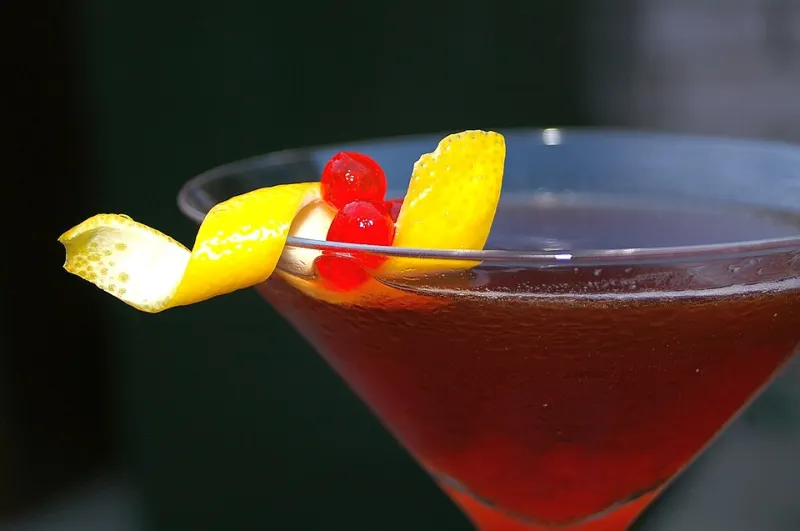
Password's 'Sazarac': Inside Britain's Boom in Prohibition-Style Supper Clubs
Photo: Unknown, CC BY-SA 4.0, via Wikimedia Commons
There's a door in a Manchester railway arch that doesn't look like much. Knock twice, say the word — it changes weekly, and no, we're not printing it — and you're inside a candlelit room where a trio is working through 'Ain't Misbehavin'' and the bartender is explaining, unprompted, that the gin in your Bee's Knees was made fourteen miles away in Salford.
Welcome to Britain's Prohibition revival: a wave of supper clubs and speakeasy-style dining rooms channeling 1920s New York, from Hackney warehouses to Glasgow basements. And unlike the real thing, nobody's drinking bath gin out of a coffee cup.
Why the Jazz Age Won't Quit
It would be easy to file this under nostalgia, but the hosts we spoke to see something deeper. "People are starved of occasion," says Danielle Okafor, who runs a monthly supper club in a Peckham railway arch where guests are greeted at a false bookcase and seated at long communal tables. "You can get a brilliant meal anywhere now. What you can't get is a bit of theatre — the secret knock, the dressing up, the sense you've been let in on something."
The Prohibition aesthetic helps, too. It's an era with a built-in wardrobe (sequins, waistcoats, cigarette holders you're allowed to hold but not use), a soundtrack (jazz, obviously) and a drinks canon built on strong spirits and sharp citrus — the Sidecar, the French 75, the old-fashioned. It maps neatly onto what British diners already love about the New York steakhouse experience, just with more velvet and less steak (though there is usually steak).
There's also the intimacy problem. Supper clubs, by design, seat strangers together. "Half our bookings are people coming on their own," says Okafor. "Try doing that at a chain restaurant on a Friday night."
Five Supper Clubs Doing It Properly
We've eaten and drunk our way around the scene. These five stood out — details are deliberately vague in places, because that's rather the point.
1. The Arch, Peckham, London. Monthly, ticketed, no signage. Twelve courses of Prohibition-era Americana reworked with British produce — think devilled eggs with Cornish crab, and a short rib that's spent longer in the oven than most of us spent in lockdown. Cocktails arrive in coupes the size of soup bowls.
2. Cotton Club North, Manchester. The railway arch from the opening paragraph. Live trad-jazz trio, a drinks list organised by decade, and a dressing-up box by the coat rack for anyone who arrived underdressed. The dry martini, stirred to near-freezing, is genuinely excellent.
3. The Gentleman's Parlour, Glasgow. Runs out of a tenement flat's back room. Sixteen covers, one sitting, and a host who greets every guest with a sherry — sorry, a "medicinal tonic." The food is Scottish produce through a New York lens: smoked salmon blinis, then a ribeye carved at the table.
4. Velvet & Vine, Bristol. A wine merchant by day, speakeasy by night. Less Gatsby, more Lower East Side — mismatched chairs, candle stubs, and a brilliant line in lowball cocktails. Their version of the Penicillin, made with Welsh honey, is worth the trip alone.
5. The Bootlegger's Table, Leeds. The newest on the list, and the most committed to the bit: guests receive a password by email, the entrance is through a barbershop, and phones live in little felt pouches until pudding. Radical, restorative stuff.
The Host's Playbook: Throwing Your Own
Inspired? Good news — this is one of the more achievable dinner party formats. Here's what the pros recommend.
Set one rule and enforce it. Phones in a drawer at the door, or a dress code, or a cocktail served before anyone sits. One ritual is enough to make the night feel like an event.
Batch your cocktails. Nobody plays good host while shaking drinks individually. Pre-batch a classic — a Manhattan or a French 75 — in a decanter, keep it in the fridge, and pour over ice. Strong, spirit-forward drinks are historically accurate and logistically forgiving.
Cook one big, carvy thing. Prohibition supper clubs were about abundance. A whole braised beef short rib, a glazed ham, or a big ribeye sliced at the table gives you the drama without keeping you in the kitchen.
Sort the soundtrack before the shopping. A decent jazz playlist — Fats Waller, Bessie Smith, early Duke Ellington — does more atmosphere work than any amount of decor. Vinyl if you've got it.
Light it low. Candles, dimmed lamps, nothing overhead. If guests can read the menu easily, it's too bright.
Hide the good stuff in plain sight. A tea tin lined with a freezer bag makes a charming (if legally pointless) hiding spot for the good whisky. Guests will find it. That's the game.
The Last Word
The irony isn't lost on anyone: an era built on banning the good stuff is now Britain's favourite excuse for a very good night. But the appeal was never really about breaking the law. It's about breaking routine — the knock, the low light, the strangers becoming friends by the third course.
Prohibition ended in 1933. Long may this version of it run.